As an owner of both the powerful Nikon Z f and the versatile Nikon Z 6II, I’m well-equipped for virtually any photographic challenge. These full-frame marvels offer exceptional image quality, interchangeable lenses, and pro-level performance. However, there’s a space in my gear bag—and my life—that’s currently unfilled: the need for an exceptional, go-anywhere camera that disappears into your pocket. So hear me out why I divulge my current urge (GAS), for something that will truly be useful to me.
Ricoh: Hear Me Out!
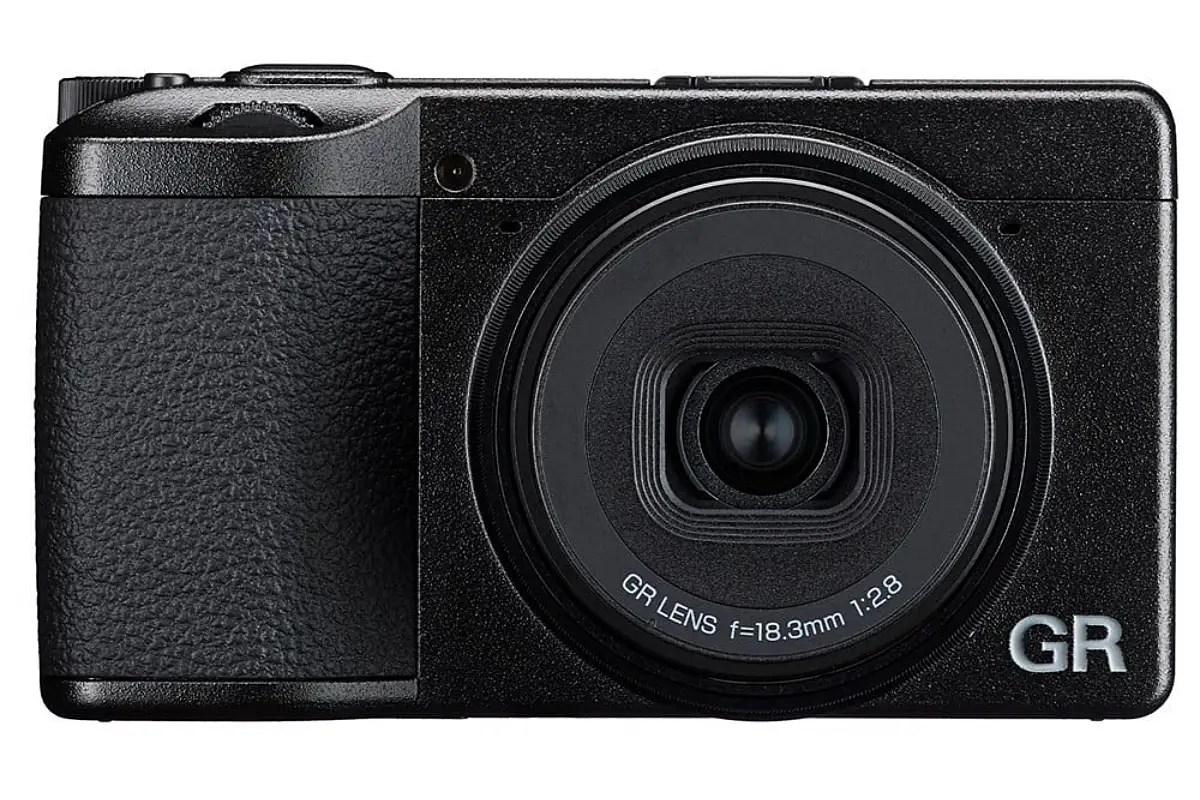
This is where the legendary Ricoh GR IV steps in, Ricoh’s latest and undoubtably greatest tiny little camera.
The appeal of the GR IV isn’t just about its technical specifications—it’s about its philosophy. It’s a camera that fosters a more spontaneous, intimate, and perpetually present style of photography, contrasting beautifully with the considered, setup-driven nature of the Nikon mirrorless system.
The “Always-On-Me” Camera: A Matter of Size and Philosophy
My Nikon bodies are fantastic tools, but they command attention and require a dedicated camera bag. They are professional instruments. The Ricoh GR IV, by comparison, is engineered to be a non-event.
Measuring approximately 109 x 61 x 33mm and weighing just 262 grams (with battery and card), it is truly pocketable. This microscopic footprint, combined with a quick boot-up time, transforms a person’s relationship with photography.
- Ubiquity: You can slip it into a jacket pocket, a small bag, or even a back pocket, ensuring it’s always with you. The best camera is the one you have, and the GR IV is the most likely candidate for being carried anywhere and everywhere, far surpassing the image quality of a mobile phone.
- Discreetness: In street photography and everyday life, the small, fixed-lens form factor is non-intrusive. It doesn’t scream “professional photographer,” allowing you to capture candid moments without alerting your subjects.
- The Power of Simplicity: With its fixed 18.3mm (approx 28mm equivalent) f/2.8 lens, the camera forces you to focus on composition and timing, rather than lens choice. It’s a creative constraint that often leads to stronger, more intentional images.
Ricoh GR IV: Pros and Cons at a Glance
The GR IV carries forward the GR lineage while introducing significant upgrades that make it a compelling choice, even for a full-frame owner.
The Pros: Why the GR IV Will Complement My Nikons
- Pocket Size: Extremely compact and lightweight. Always with me for spontaneous shots. No need for a camera bag.
- APS-C Sensor: New 25.7MP sensor. Excellent image quality that rivals the sensor size of my Nikons (when using a DX crop), but in a tiny body.
- Fixed 28mm Lens: Sharp f/2.8 lens (equiv.). Forces creative focus on composition. Ideal focal length for street and environmental portraits.
- Snap Focus Mode: Instant focus at pre-set distances. Unbeatable speed for capturing decisive moments in street photography.
- 5-Axis IBIS: Upgraded from 3-axis on the GR III. Improved handheld shooting stability in low light, compensating for the lack of a large lens to grip.
- Internal Memory: Generous 53GB built-in storage. A safety net, allowing you to shoot even if you forget a microSD card.
- “Ricoh Colours”: Highly-praised JPEG image-processing engine. Produces gorgeous, signature JPEG straight out of the camera—perfect for immediate sharing.
The Cons: Understanding the Compromises
- No Viewfinder: Relies solely on the fixed rear LCD. Challenging in bright sunlight and less immersive than the Z-series EVFs. Although technically a con, I actually think I will not mind this way of shooting.
- Fixed Screen: No tilt or articulation. Difficult low-angle or high-angle shooting compared to the Z 6II’s tilting screen or Z f’s fully articulating screen.
- Limited Video: Full HD (1080p) up to 60fps (no 4 k). Not a video machine; clearly prioritised for stills. Will not replace your Nikons for serious video work when and if needed.
- Battery Life: CIPA rating of approx 250 shots per charge. Requires extra batteries for a full day of shooting. Significantly less than my Nikon bodies.
- Fixed Lens: No zooming or lens changes. For telephoto or wide-angle shots, my Nikon system remains essential. The camera does have in-camera 35mm and 50mm crop modes though.
Conclusion: A Creative Imperative
The impulse to acquire the Ricoh GR IV is completely understandable for me, not as a replacement for my Nikon Z f or Z 6II, but as their perfect complement.
My Nikons are my workhorses, my planned shooting tools, capable of delivering ultimate resolution and versatility. The Ricoh GR IV would be my photographic sketchbook—a tiny powerhouse of an APS-C sensor and a superlative lens, dedicated to the pure joy of seeing and capturing the everyday moments that a larger camera often misses.
My goal is to have a camera that effortlessly lives in my pocket, ready to capture stunning, high-quality images of the world around me at a moment’s notice. I feel that the GR IV is arguably the best compact option available and a unique addition to my professional kit.
 One Camera One Lens Photography