
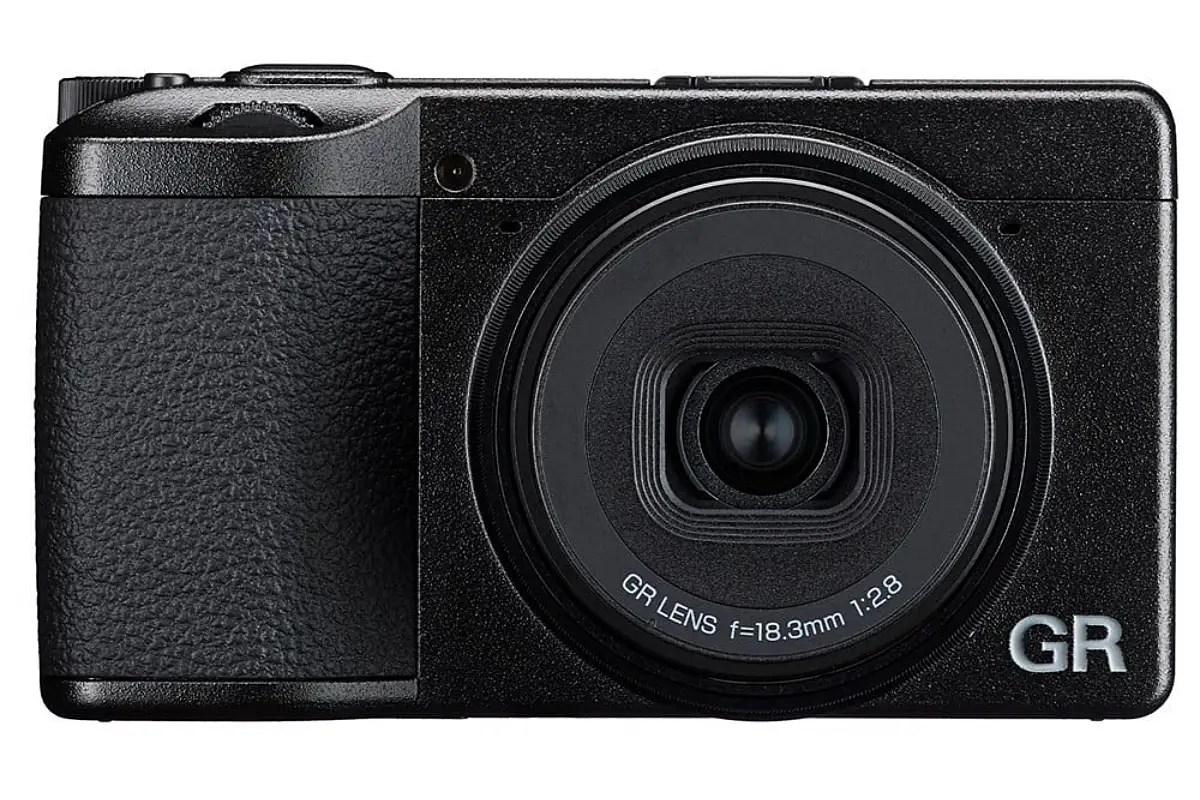
With Ricoh announcing a monochrome only camera, and companies like Leica with their M11 and Q2 Monochrom and Pentax with the K3, you have to wonder why these monochrome only cameras exist, and would they be of interest to people?
What is a digital monochrome camera?
Digital cameras that only take photos in black and white, often called monochrome cameras, are highly specialised tools built for photographers committed to monochrome work. Unlike standard digital cameras that capture colour and then convert the image to black and white, these dedicated cameras have an image sensor designed without a Bayer colour filter array. This filter, which sits over the sensor in a colour camera, is necessary to capture Red, Green, and Blue light information, but it also filters out light and slightly reduces image detail.
Technical Advantages and Image Quality
The omission of the colour filter array provides several significant technical advantages. By removing the filters, the sensor can capture more light, which leads to better performance in low-light conditions and a higher native ISO. Crucially, it also removes the need for a process called “demosaicing”—the camera’s interpolation of colour and luminance data—resulting in images with sharper detail, higher perceived resolution, and more subtle, accurate tonal gradations. The resulting images are said to have a purity and richness in their blacks and whites that is difficult to replicate with a converted colour file, offering superior micro-contrast and dynamic range for black-and-white work.
Philosophical Approach
For photographers, choosing a monochrome-only camera is often a philosophical choice that encourages a different way of seeing and composing. By committing to black and white from the moment of capture, the photographer must focus entirely on light, shadow, shape, and texture, without the distraction of colour. This limitation can be incredibly freeing and challenging, mirroring the mindset of traditional black-and-white film photography. The main downside, of course, is the complete loss of the option to ever capture a colour image. But is it really a downside?
Just photograph in colour and convert to black and white!
A phrase that is often said by photographers, “Why not just shoot in colour and then convert to black and white?”. Well, other than the advantages mentioned above, this of course can be easily achieved, but for a lot of people, shooting in black and white and not having the option to have a colour version is a choice. Going out with the camera with intent seriously changes the way you think about taking photographs.
I am certainly in the “shooting with intent” camp (with all my photography). I’ve never really liked the “fix it in post” approach, and that goes for black and white photography too, so the idea of a Ricoh GRIV Monochrome is highly compelling to me.
Conclusion – Curiosity or Perfection?
For many people, dedicated black and white cameras are a curiosity, a novelty even. However, these cameras are not aimed at those people and are just what black and white photographers have always wanted. The crisp images, the low light performance, the skill of shooting and understanding black and white is perfection to those dedicated photographers.
 One Camera One Lens Photography
Really interesting read, Mark.
I don’t think I’d jump straight into a dedicated B&W camera myself – the idea is tempting, but I’ve been down the “Noir” rabbit hole before (thanks to an old Omar Gonzalez Fuji trick), and back then it just didn’t stick for me.
That said… your article leaves me with one big question:
How much difference is there, really, between a true monochrome sensor and a top-tier colour camera converted to B&W? Same scene, same moment, good lens.
If the difference is obvious, that could change everything for me. If it’s barely noticeable… well, then what’s the real value?
I’m genuinely curious – maybe you know someone with a dedicated B&W body who’d be up for a side-by-side comparison?
Thanks for the great article !
Have a great weekend and all the best,
Marc
LikeLiked by 2 people
I’m all honesty Marc, I think, without pixel peeping, the difference will be very minor. I really think the idea of black and white dedication can be achieved purely by the intent to photograph that way. It is very niche, but for the right price, it may be worth taking a dip into the land of monochrome sensors (or conversions).
LikeLiked by 1 person
Hey Mark, about your “right price” point – yeah, you’re absolutely right. And honestly, that number shifts around depending on the kind of day I’m having. But you’re right about the differences too. Maybe you only really notice them when you put the files side by side, but like you said, even beyond the exact results there’s something happening in your head – a different way of shooting, or looking at a subject, that suddenly feels worth exploring.
Are you actually thinking about getting one of those cameras? Either way, it’s a very personal decision… but one that might carry more value than it first seems.
LikeLiked by 1 person
If the price is right… But honestly, I really need to get into black and white photography much more. I’ve actually set up my ZF for Monochrome, including grain with a new little recipe and might do a week or two of just that, and jpeg only too.
LikeLiked by 1 person
there is a Monochrome conversations group on FB created by the great camera engineer who is known as a camera’s sensor professional converter to BW only. You can ask your questions there.
https://www.facebook.com/groups/759283759966024/?ref=share&mibextid=NSMWBT
LikeLiked by 2 people
Lovely! Thank you for sharing
LikeLiked by 1 person
my pleasure. To have the only bw limited camera is an amazing idea. Exactly what i do when I shoot a BW film, and i only use BW. But i really worry about the new Ricoh cameras price. And the monochrome version would be even more expensive.
LikeLiked by 1 person
I like full commitment and intent when out with the camera. I’ve actually set up my old Panasonic Lumix camera to be my B&W camera, and I intend not to shoot colour with it. I think it just makes you think a lot more about taking the images that way.
LikeLiked by 1 person
For my digital daily work I use Ricoh GRii. There is a BW function included but the problem is that it automatically converts the image to JPG instead to leave it RAW. So I prefer to stay with RAW but to convert in LR and stay with the highest possible quality. The builtin camera convert makes the images very thin and kinda problematic for a big enough print. But today most of ppl just shoot for sharing on social media so probably the camera manufactures don’t care much about the file quality.
LikeLiked by 1 person
Thanks for the tip and the link — I’ve signed up in the meantime. Thanks!
LikeLiked by 2 people
with my pleasure
LikeLiked by 2 people
you can talk directly with the group host. Some time ago i spoke with him when I wanted to send him my broken Ricoh to repair it and by the way to convert it. Right now I’m on hold with this but this guy is very serious in his knowledge..
LikeLiked by 2 people
Thank you very much for your help and your tips, Victor.
LikeLiked by 1 person
Your post brought back memories. I started with a Zenit and developed B&W films in a basement darkroom. Those prints still feel magical. While I find it hard to see a scene in B&W in advance, I truly appreciate the purpose behind these dedicated cameras.
LikeLiked by 1 person