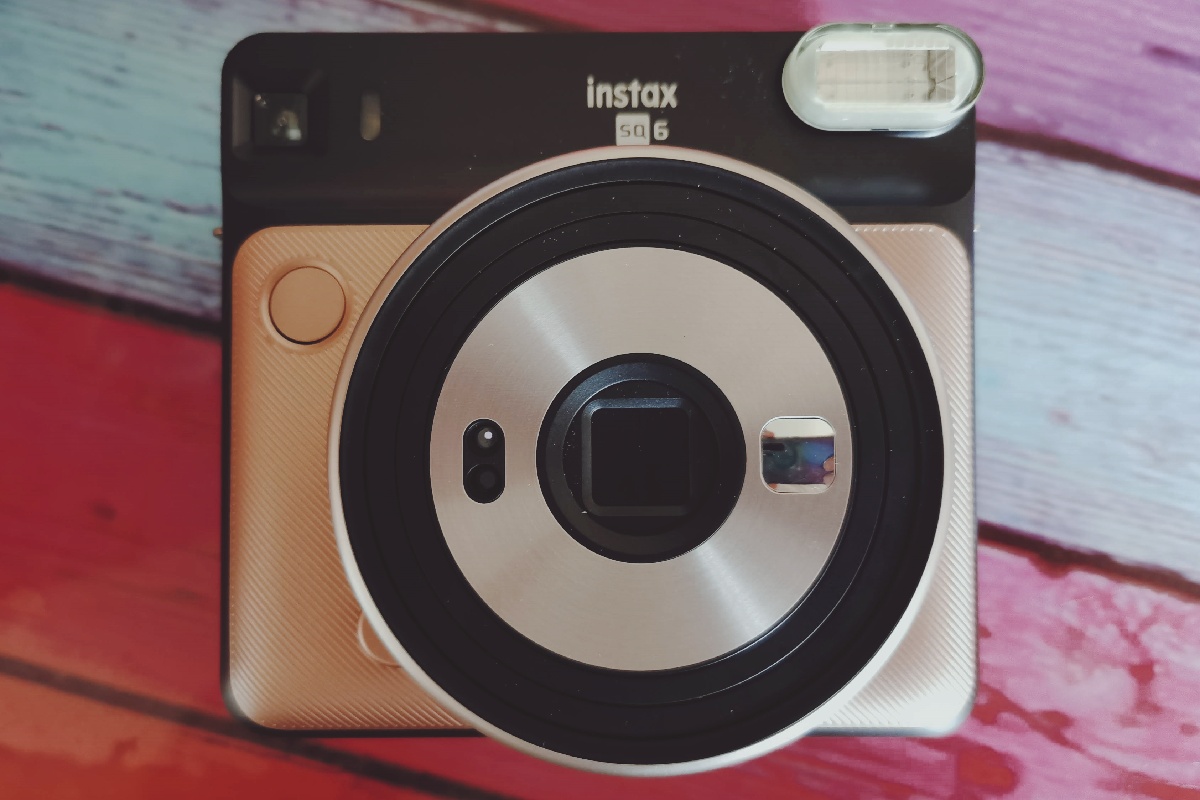
In an era where “analogue” often involves a digital sensor, a smartphone filter, or a hybrid scanning process, instant film stands as a stubborn, beautiful outlier. While traditional 35mm film is often hailed as the gold standard of the medium, the reality is that most modern film photography eventually touches a computer. In fact, in almost every circumstance, Instant Film is the last fully analogue film experience left for us to enjoy.
Instant film, remains the last bastion of a true, closed-loop analogue experience. Here is why this chemistry-heavy format is the final frontier of pure photography.
1. The Absence of the “Digital Bridge”
When you shoot a roll of 35mm film today, the journey usually looks like this: capture on silver halide, develop in chemicals, and then digitally scan the negative to a computer. Once that scan happens, the image is converted into pixels, bit-depths, and metadata. Basically it is a different process of achieving a digital file.
Instant photography, such as Polaroid or Fujifilm Instax, eliminates the bridge. The light that bounces off your subject travels through the lens and strikes the chemistry directly. The physical object in your hand is the same material that was inside the camera at the moment of exposure. There is no conversion to binary; it is a continuous physical reaction.
2. The Darkroom in Your Pocket
In traditional photography, the “magic” happens in a darkroom or a lab. Instant film miniaturizes this entire laboratory into a sheet thinner than a credit card.
Each frame contains:
- Photosensitive layers: Capturing the light.
- Developer pods: Crushed by the camera’s rollers to release reagent.
- Neutralizing layers: To stop the reaction at the perfect moment.
This is a mechanical and chemical miracle. When the camera ejects the frame, you are witnessing a complex chemical sequence. Opacifiers clearing, dyes migrating, and acid layers stabilizing, all happening in the palm of your hand without a single line of code. Pure analogue magic.
3. The Singular Original
Digital photography is the art of the infinite copy. Even traditional film allows for endless reprints from a single negative.
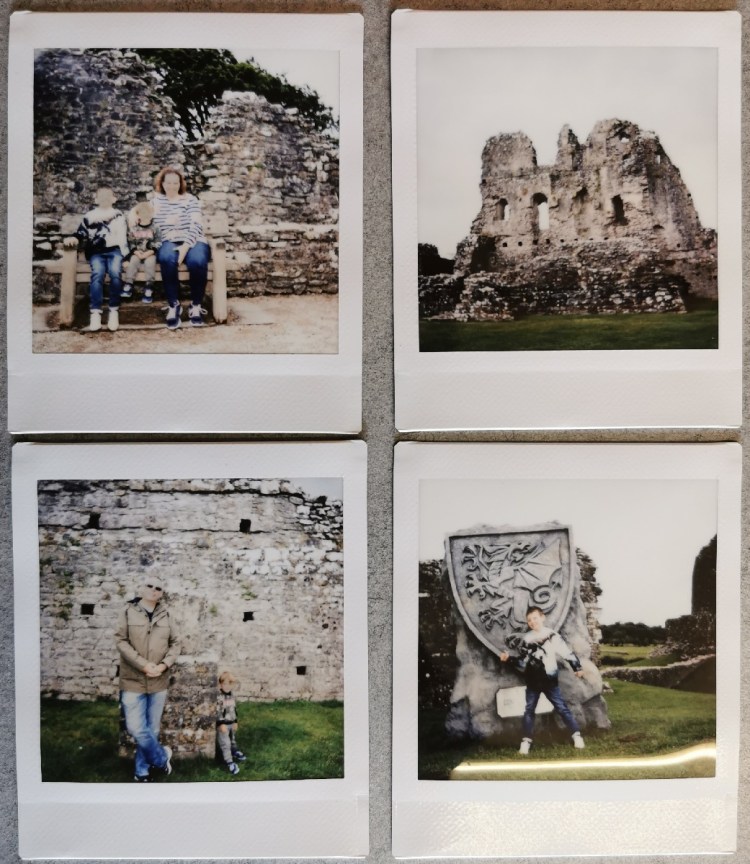
Instant film is monotypic. Because there is no negative, the photo you hold is a singular, unrepeatable object. If you lose that specific piece of plastic and chemistry, the image is gone forever. This “one-of-one” nature restores a sense of preciousness to photography that was lost when storage moved to the cloud.
4. An Honest Relationship with Light
Modern digital cameras are designed to “fix” your environment. They use AI to brighten shadows, sharpen edges, and balance white levels.
Instant film is brutally honest. It has a narrow dynamic range and a specific colour science dictated by the chemical batch of the film. It doesn’t try to guess what you wanted the photo to look like, it simply records how the light reacted with the chemicals provided. This creates an aesthetic that isn’t a retro fiter applied after the fact, it is the literal fingerprint of the light at that moment.
The Verdict
Instant film is more than just a nostalgic novelty. It is a defiant rejection of the digital workflow. By keeping the capture, development, and final viewing within a single physical object, it remains the most authentic way to practice photography as it was originally intended: a dance between light and chemistry.
You can find all the latest articles and blogs on my homepage here.
My main photography social media page is my Facebook One Camera One Lens Photography page.
Nikon Recipes for the Z system can be found here.
You can find a complete list of my gear here.
 One Camera One Lens Photography
The Polaroid process has always fascinated me. When I was younger, somewhere around sixteen or eighteen, I had the well-known plastic rainbow Polaroid SX-70. Fun camera, but even back then it felt like the entry ticket to a much more elegant club, because there were far more beautiful folding models finished in leather and metal, objects that looked like cameras should look. I suspect many of those are still in use today, quietly outliving trends.
I also owned one of those tiny Canon cameras that spit out credit-card-sized photos. Entertaining, yes, but the images were nothing to write home about, and the format was so small that it always felt more like a novelty than a photograph.
Recently I stumbled across a YouTube video showing the Polaroid Type 55 process, which actually produces a real negative. That immediately changes the conversation. It turns instant photography from a visual gimmick into something far more serious, and definitely something worth a closer look. Either way, it’s a beautifully made article on a genuinely interesting subject, Mark.
https://youtu.be/c-m3eRgyI6w?si=6zDM6-ePlenXE10J
LikeLiked by 1 person
I don’t think instant photography is a gimmick in any way, and there are many conversion kits available for the cameras, which totally ruins the “instant” part of the photography.
For weddings and events (and family occasions), instant cameras are essential, and they bring instant joy to any situation. People carry those photos around with them for ever in their wallets and purses.
It’s as much real photography as is a 35mm camera, just more raw and more real. Capturing the heart and soul of whatever you point it at.
LikeLiked by 1 person