
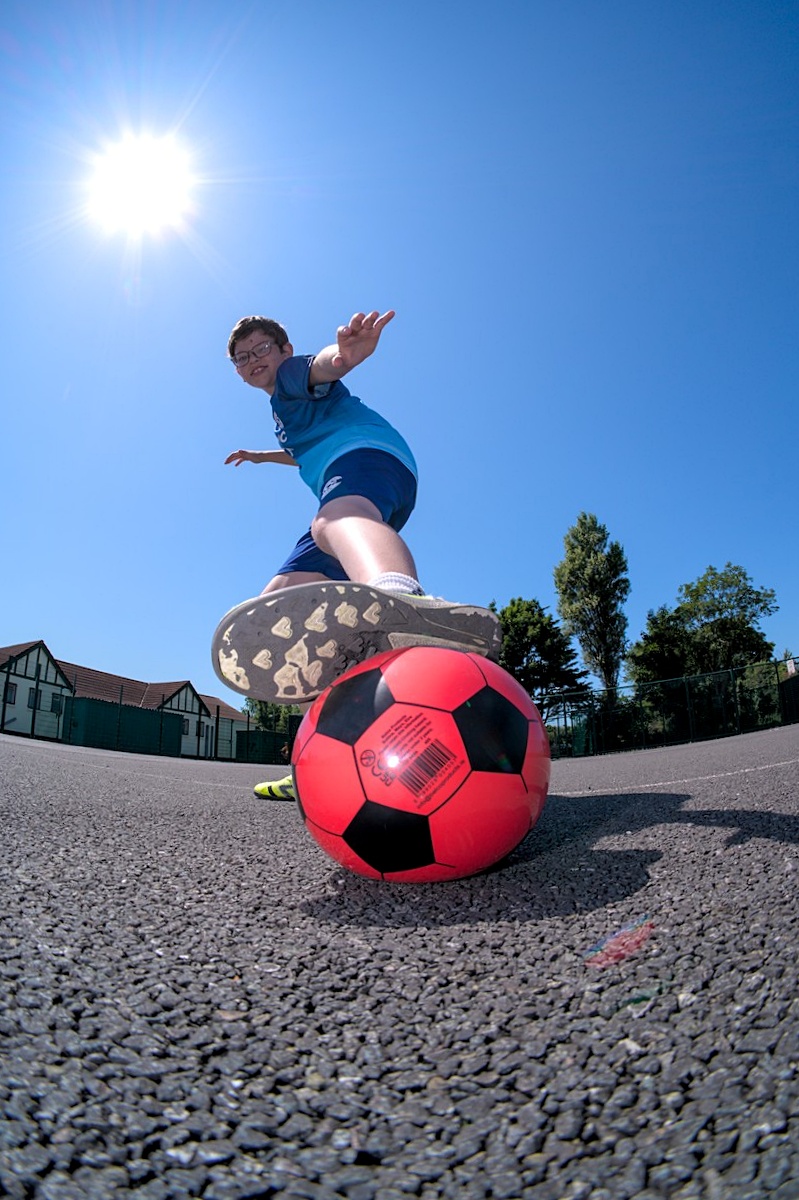
I was obsessed with wide angle lenses and fisheye lenses for many years. I always thought there was something special about having everything in your shot. Of course, they are still handy, but in hindsight they have a time and place to be used.
While wide-angle lenses (typically 24mm and wider on a full-frame camera) are powerful tools for capturing sweeping landscapes or fitting a lot into the frame, relying on them for every type of photography can introduce significant drawbacks that compromise the quality and impact of your images.
The Issues With Using Wide Angle Lenses All The Time
Distortion and Perspective Issues:
The most common drawback is the introduction of various types of distortion, which can be difficult to correct entirely:
- Geometric Distortion: Wide-angle lenses, especially those at the extreme end (e.g., fisheye lenses), are prone to barrel distortion, where straight lines appear to bow outwards from the centre. This is particularly noticeable in architectural photography .
- Perspective Distortion/Stretching: When objects near the edge of the frame are close to the lens, they become stretched and disproportionately large. For example, in a portrait taken up close with a wide lens, the subject’s nose might appear massive and their features distorted, which is generally unflattering.
- Converging Verticals: When the camera is tilted up to capture a tall subject (like a building), parallel vertical lines appear to converge dramatically toward the top of the frame. This can make structures look like they are falling backward.

Making Subjects Appear Small and Distant:
Wide-angle lenses exaggerate the distance between foreground and background elements. This can be a negative in many situations:
- Diminishing Subject Impact: If you’re trying to highlight a specific subject, the wide field of view often makes it appear smaller and less significant within the frame. The subject gets “lost” in the environment.
- Unflattering for Portraits: Beyond the stretching mentioned earlier, the wide perspective makes people’s faces look less three-dimensional and their features less distinct, rarely achieving the flattering compression offered by a telephoto lens.
Difficulty in Composing and Isolating Subjects:
The expansive view of a wide-angle lens can make careful composition challenging:
- Cluttered Backgrounds: Because the lens captures so much, it’s difficult to avoid including distracting or irrelevant elements in the background. Tidiness becomes an issue, and the main subject can struggle to stand out from the visual noise.
- Lack of Subject Isolation: Unlike telephoto lenses, wide angles typically offer a greater depth of field at the same aperture, making it harder to use a shallow depth of field (like bokeh) to blur the background and isolate a subject effectively.
Requiring Extreme Proximity to the Subject:
To make a subject impactful and large enough in the frame using a wide-angle lens, you often have to move very close to it.
- Intrusiveness: This close proximity can be intrusive or uncomfortable for portrait subjects, wildlife, or during candid street photography.
- Exaggerated Imperfections: The closeness also significantly exaggerates any slight shifts in camera angle or focus, making even minor imperfections in composition or focus more apparent.

Conclusion
While wide-angle lenses excel at dramatic scenes and constrained spaces, they are poor general-purpose lenses because of their tendency to distort reality and diminish the visual impact of individual subjects. For consistent, flattering, and focused results, photographers often need to turn to lenses with a more “normal” or telephoto perspective.
With all this said, they can be fun to use, and they are genuinely useful in the he right situations. Whereas you can use a standard lens (35mm-70mm) everyday for everything, be thoughtful with wide lenses and you will really elevate your photography results and skills.
Do you want to see more examples of wide and super-wide angle images?
Interesting architecture in Swansea at 14mm
A special photoshoot with two wonderful models at 11mm
Architecture and more at 11mm, 20mm and 24mm
Have you missed any of my latest articles? Visit the “Home” page now! It has been revamped and everything you need can be found quickly and easily on there!
 One Camera One Lens Photography
Great read, Mark, and spot on!
I went through that same wide-angle phase myself, the wider, the better, or so I thought. It took me some time (and a few bent buildings) to realize that what feels epic in the viewfinder can look oddly distant once it’s on screen 🙂
Your point about context vs. focus really lands. Wide glass still has its place, but only when you make it serve the story.
Keep up the good work !
Marc.
LikeLiked by 1 person
Thank you Marc, much appreciated. I think we all go through these phases, and sometimes we just need to step back and realise what we have been doing.
LikeLiked by 1 person